

Easy Bibimbap Recipe: A Quick Korean Meal Idea for Dinner To Go
There’s something wonderfully satisfying about a freshly made bowl of bibimbap. This classic Korean mixed rice dish is a vibrant medley of flavors and textures that brings a sense of comfort and excitement. Whether you’re introducing your friends to Korean cuisine or enjoying a cozy night in, this Easy Bibimbap recipe is perfect for any occasion. With a colorful array of vegetables, tender beef, and a spicy sauce, it’s a meal that truly embodies the beauty of balance. Trust me, once you try making bibimbap at home, you’ll wonder why you didn’t do it sooner!
Why you’ll love this dish
Bibimbap is not just a meal; it’s a culinary experience that appeals to everyone. You’ll fall in love with its versatility—it’s fully customizable according to your taste preferences. This recipe is quick to whip up, making it ideal for weeknight dinners or whenever you need a satisfying meal in a pinch. Plus, it’s budget-friendly, allowing you to create a feast without breaking the bank.
One satisfied home cook raves: “This Easy Bibimbap quickly became a family favorite! It’s colorful, delicious, and my kids love helping with the toppings. I can’t believe how simple it is to make!”
Step-by-step overview
Crafting this Easy Bibimbap is a straightforward process that’s both fulfilling and enjoyable. You’ll start by preparing the delectable bibimbap sauce and cooking each ingredient separately to ensure every component retains its unique flavor and texture. Finally, you’ll assemble everything over a bed of fluffy rice and add an egg on top for richness. In just a short while, you’ll have a stunning dish ready to be devoured.
Gather these items
To create this delightful bibimbap, you’ll need the following ingredients:
- For the bibimbap sauce:
- ¼ cup gochujang (Korean red chili paste)
- 2 tablespoons honey (or sugar)
- 1 teaspoon garlic (minced, about 1 clove)
- 1 teaspoon toasted sesame oil
- For the bibimbap toppings:
- 8 ounces mung bean sprouts (or soy bean sprouts)
- ½ teaspoon salt
- 1 tablespoon toasted sesame oil
- 10 ounces baby spinach
- ¼ teaspoon salt
- ½ tablespoon toasted sesame oil
- 1 large carrot (peeled and cut into juliennes/thin matchsticks)
- 2 teaspoons toasted sesame oil
- 1 teaspoon salt
- 8 ounces mushrooms (sliced; shiitake work beautifully but feel free to use your favorites)
- ¼ teaspoon salt
- 1 teaspoon toasted sesame oil
- 1 pound ground beef (80/20 is recommended for flavor)
- ¼ cup soy sauce
- ¼ cup honey
- 1 tablespoon garlic (minced, about 3 cloves)
- 2 teaspoons toasted sesame oil
- 3 cups cooked white rice (adjust as desired)
- 3 large eggs
- Green onion (thinly sliced for garnish, optional)
- Toasted sesame seeds (optional for garnish)
- Oil (as needed for cooking)
Step-by-step instructions
- Prepare the bibimbap sauce: In a mixing bowl, combine ¼ cup gochujang, 2 tablespoons honey, 1 teaspoon minced garlic, and 1 teaspoon toasted sesame oil. Mix well and set aside.
- Cook the bean sprouts: In a pot of boiling water, blanch 8 ounces of mung bean sprouts for about 30 seconds. Drain, season with ½ teaspoon salt, and 1 tablespoon toasted sesame oil. Toss to coat and set aside.
- Sauté the spinach: In a skillet, heat a little oil over medium heat. Add 10 ounces of baby spinach and sauté until wilted, sprinkling with ¼ teaspoon salt and ½ tablespoon toasted sesame oil. Set aside.
- Prepare the carrots: Sauté the julienned carrot in a skillet with 2 teaspoons of toasted sesame oil and 1 teaspoon salt until tender-crisp. Set aside.
- Cook the mushrooms: In the same skillet, add 8 ounces of sliced mushrooms with 1 teaspoon toasted sesame oil and ¼ teaspoon salt. Cook until they are golden and tender, then remove from heat.
- Cook the beef: In a pan, cook 1 pound of ground beef over medium-high heat until browned. Drain excess grease and stir in ¼ cup soy sauce, ¼ cup honey, and 1 tablespoon minced garlic. Cook for an additional minute. Remove from heat.
- Cook the eggs: Fry the eggs sunny-side up in a bit of oil, or cook to your liking.
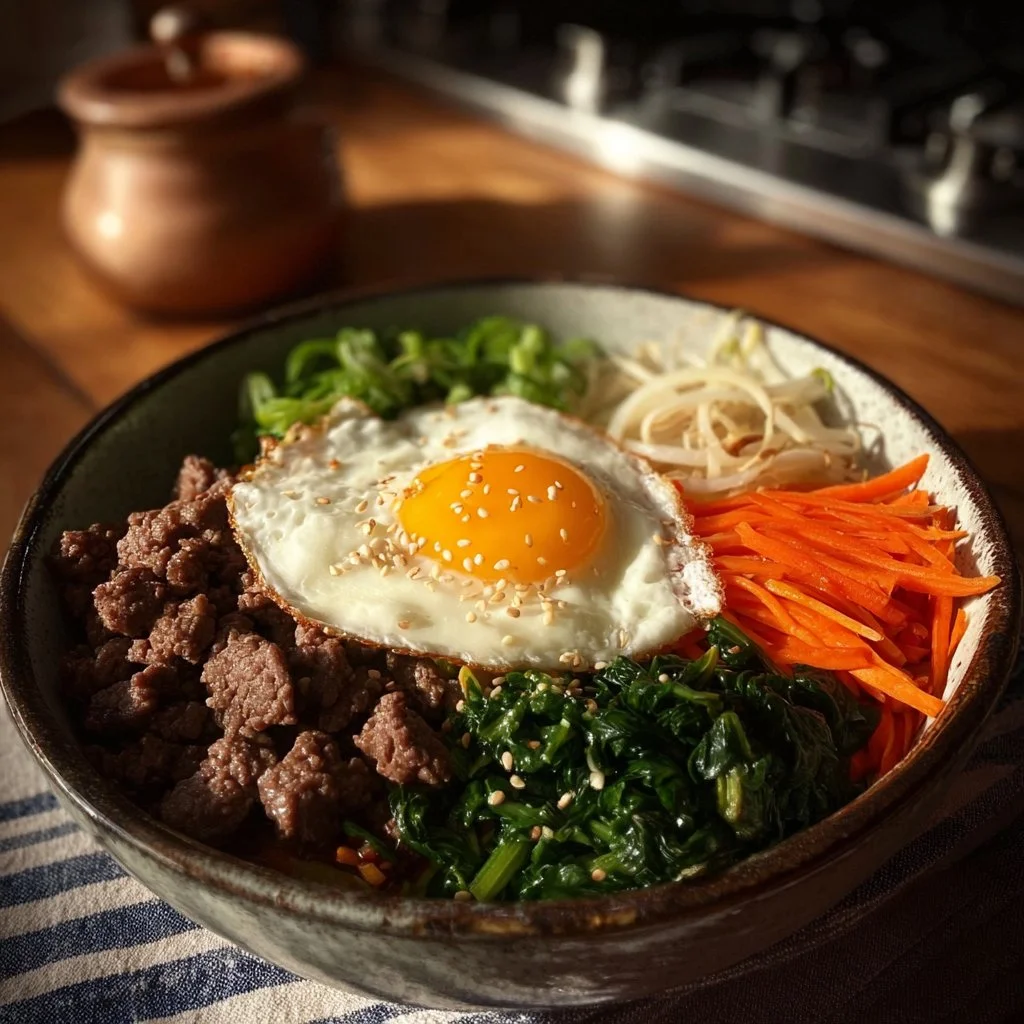
- Assemble the bibimbap: On individual plates, place a scoop of rice in the center. Arrange the prepared vegetable toppings, ground beef, and a fried egg on top. Drizzle with the bibimbap sauce and garnish with green onions and toasted sesame seeds if desired.
Best ways to enjoy it
When serving up your Easy Bibimbap, creativity is your ally! Serve the dish in colorful bowls for a vibrant display, allowing each person to mix and match their toppings as they like. Pair it with refreshing kimchi on the side, or finish the meal with a light miso soup for a nourishing experience. For an extra touch, consider adding a sprinkle of nori strips or a dash of lime juice for added zing.
Storage and reheating tips
To keep your leftovers fresh, store each component separately in airtight containers. The vegetable toppings and beef can be safely refrigerated for about 3-4 days. If you want to enjoy the rice later, consider freezing it in small portions for up to a month. When ready to eat, simply reheat in the microwave or on the stove, adding a splash of water to revive the texture.
Pro chef tips
- Prep in advance: To save time, prepare your vegetables and bibimbap sauce ahead of time. Everything can be stored in the fridge for a day or two before assembly.
- Use leftover rice: Day-old rice works perfectly for bibimbap. It’s drier, which prevents the dish from becoming mushy.
- Customize your proteins: Experiment with different proteins like chicken, tofu, or even seafood for a unique spin on your bibimbap bowl.
Creative twists
Feeling adventurous? Here are some fun variations to try with your bibimbap:
- Vegetarian Delight: Skip the beef and load up on additional vegetables such as zucchini or bell peppers. You could even add fried tofu for protein.
- Spicy Kick: Add a teaspoon of Korean chili flakes (gochugaru) to the bibimbap sauce for an extra layer of heat.
- Fried Rice Twist: Use fried rice instead of plain white rice for a flavorful base.
Your questions answered
1. What is bibimbap? Bibimbap is a traditional Korean dish that consists of mixed rice, an assortment of vegetables, beef (or other proteins), and a spicy sauce. It’s known for its vibrant colors and flavors.
2. Can I use brown rice instead of white rice? Absolutely! Brown rice adds a nuttier flavor and more nutritional benefits. Just be sure to cook it thoroughly before assembling.
3. How do I store leftover bibimbap? Store each component in separate airtight containers. Refrigerate and consume within 3-4 days.
4. What can I substitute for gochujang? If you can’t find gochujang, you could use a combination of miso paste and a bit of hot sauce as an alternative, although the flavor will differ.
5. Can I make this dish vegetarian? Yes! Simply omit the ground beef and add more vegetables or a protein like tofu, tempeh, or edamame.
6. What is the best way to serve bibimbap? Serve bibimbap in individual bowls for a colorful presentation. Don’t forget to add a fried egg on top for added richness!
7. How spicy is this recipe? The spiciness mainly comes from gochujang. You can adjust the amount based on your heat tolerance or use a milder alternative.
8. Can I freeze bibimbap components? Yes, you can freeze the rice and beef. However, it’s best to eat the vegetables fresh for optimal texture and flavor.

Easy Bibimbap
Ingredients
Bibimbap Sauce
- 0.25 cup gochujang (Korean red chili paste)
- 2 tablespoons honey (or sugar)
- 1 teaspoon garlic (minced, about 1 clove)
- 1 teaspoon toasted sesame oil
Bibimbap Toppings
- 8 ounces mung bean sprouts (or soy bean sprouts)
- 0.5 teaspoon salt
- 1 tablespoon toasted sesame oil
- 10 ounces baby spinach
- 0.25 teaspoon salt
- 0.5 tablespoons toasted sesame oil
- 1 large carrot (peeled and cut into juliennes/thin matchsticks)
- 2 teaspoons toasted sesame oil
- 1 teaspoon salt
- 8 ounces mushrooms (sliced; shiitake recommended)
- 0.25 teaspoon salt
- 1 teaspoon toasted sesame oil
- 1 pound ground beef (80/20 recommended)
- 0.25 cup soy sauce
- 0.25 cup honey
- 1 tablespoon garlic (minced, about 3 cloves)
- 2 teaspoons toasted sesame oil
- 3 cups cooked white rice adjust as desired
- 3 large eggs
- to taste green onion (thinly sliced for garnish, optional)
- to taste toasted sesame seeds (optional for garnish)
- as needed for cooking oil
Instructions
Preparation
- In a mixing bowl, combine ¼ cup gochujang, 2 tablespoons honey, 1 teaspoon minced garlic, and 1 teaspoon toasted sesame oil. Mix well and set aside.
- In a pot of boiling water, blanch 8 ounces of mung bean sprouts for about 30 seconds. Drain, season with ½ teaspoon salt and 1 tablespoon toasted sesame oil. Toss to coat and set aside.
- In a skillet, heat a little oil over medium heat. Add 10 ounces of baby spinach and sauté until wilted, sprinkling with ¼ teaspoon salt and ½ tablespoon toasted sesame oil. Set aside.
- Sauté the julienned carrot in a skillet with 2 teaspoons of toasted sesame oil and 1 teaspoon salt until tender-crisp. Set aside.
- In the same skillet, add 8 ounces of sliced mushrooms with 1 teaspoon toasted sesame oil and ¼ teaspoon salt. Cook until they are golden and tender, then remove from heat.
- In a pan, cook 1 pound of ground beef over medium-high heat until browned. Drain excess grease and stir in ¼ cup soy sauce, ¼ cup honey, and 1 tablespoon minced garlic. Cook for an additional minute. Remove from heat.
- Fry the eggs sunny-side up in a bit of oil, or cook to your liking.
Assembly
- On individual plates, place a scoop of rice in the center. Arrange the prepared vegetable toppings, ground beef, and a fried egg on top. Drizzle with the bibimbap sauce and garnish with green onions and toasted sesame seeds if desired.


